How to Avoid Mistakes When Choosing Solar Panels?

Time:2026-10-07 Author:Charlotte
0%

Choosing solar panels is not simply a matter of selecting the highest wattage on a product page. A suitable system must match your roof, climate, electricity use, budget, and long-term maintenance expectations. A panel that performs well in a sunny test laboratory may deliver different results under shade, heat, dust, or winter conditions. Small details matter. Roof orientation matters. So does available installation space.

Before comparing brands, ask: what mistakes should you avoid when choosing solar panels? Many buyers overlook temperature coefficients, degradation rates, inverter compatibility, and warranty conditions. Some focus only on the panel’s rated power, ignoring performance in low-light conditions. Others accept vague installation promises without checking certifications, insurance, or previous project quality. An experienced installer should explain these points clearly and provide realistic production estimates based on local weather data. Independent testing standards and manufacturer documentation can support that advice, but they do not replace a proper site assessment.

Read the warranty carefully. “Twenty-five years” may cover performance, not labor or replacement costs. That difference can become expensive. Also inspect the proposed layout, cable paths, mounting hardware, and drainage around the roof. A reliable decision combines technical evidence with practical judgment. No checklist catches every problem. Even careful buyers can misunderstand unfamiliar specifications. Pause when a quote feels rushed, unusually cheap, or too perfect. Asking precise questions now is easier than repairing a poorly matched solar system later.
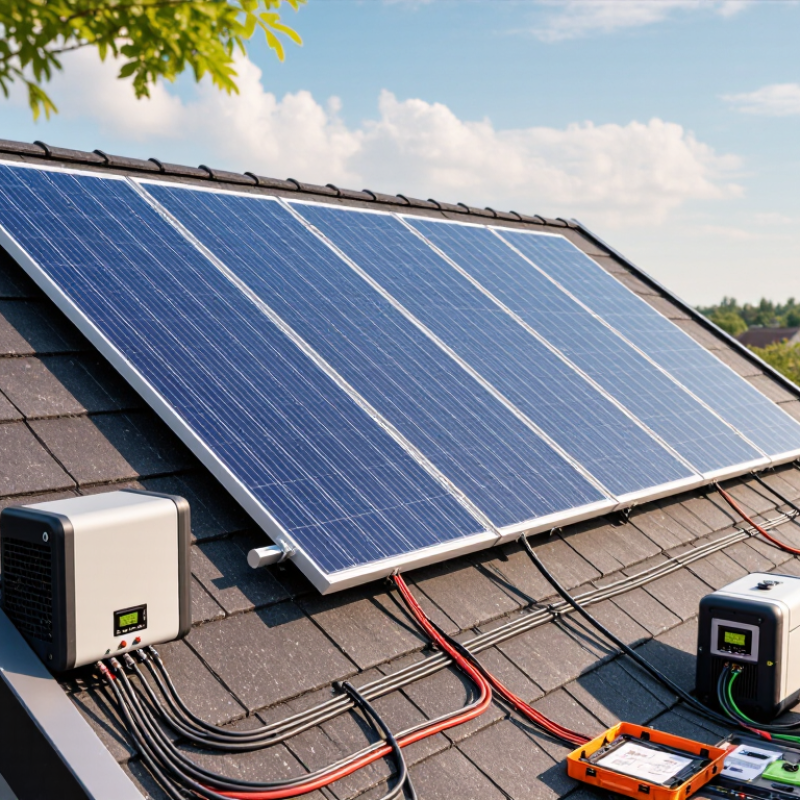
How to Avoid Mistakes When Choosing Solar Panels?

Define Your Energy Needs and Installation Conditions

How to Avoid Mistakes When Choosing Solar Panels?

Define Your Energy Needs and Installation Conditions

Choosing solar panels should begin with your electricity use, not panel appearance. Review twelve months of utility bills and record average monthly kilowatt-hours. Note seasonal changes, especially increased cooling or heating demand. A small home may still need a larger system during hot summers.

List the appliances that matter most. Air conditioners, heat pumps, water heaters, and electric vehicle chargers can create high demand. Their starting loads may also exceed normal running power. A qualified installer should calculate both daily energy use and peak demand. Guessing here is risky.

Then inspect the installation site carefully. Roof direction, pitch, shade, and usable area directly affect production. A chimney, nearby tree, or new building can reduce output during key daylight hours. Check the roof’s age and load capacity before installation. Replacing an old roof later can mean removing the system.

Local weather matters too. Strong wind, heavy snow, dust, and high temperatures influence mounting requirements and panel performance. Ask for production estimates based on local climate data, not perfect sunshine assumptions. Battery storage may help when evening demand is high, but it also adds cost, weight, and maintenance considerations. It is easy to overestimate future savings. Recheck the numbers.

Compare Solar Panel Types, Efficiency, and Performance Ratings

Choosing solar panels becomes easier when efficiency and performance ratings are read together. Efficiency shows how much sunlight a panel converts into electricity. The Fraunhofer Institute’s Photovoltaics Report 2024 places leading commercial crystalline-silicon modules near 23% efficiency. Some newer products approach 24%. Higher efficiency helps when roof space is limited. It does not automatically mean better annual output.

Compare panel types carefully. Monocrystalline panels usually offer higher efficiency and a smaller footprint. Polycrystalline panels generally cost less but need more space. Thin-film panels can perform well in certain low-light or hot conditions. However, their larger area may challenge a compact roof. The National Renewable Energy Laboratory warns that laboratory cell records should not be confused with commercial module performance. That distinction is easy to miss.

Study the full rating sheet, not only the headline wattage. Check the temperature coefficient, because output falls as the panel heats under strong summer sun. A lower negative coefficient is preferable. Review annual degradation, power tolerance, and the independent IEC 61215 and IEC 61730 safety certifications. IEA PVPS reported 456 gigawatts of new solar capacity worldwide in 2023, showing rapid technical expansion. Yet fast progress can create confusing specifications. I would measure shading at different hours, then compare expected yearly production rather than peak power alone. My earlier instinct was to prioritize efficiency; that was incomplete. A cooler, well-positioned panel can outperform a denser panel under real roof conditions. Nearby trees matter. So does ventilation.

Check Product Quality, Certifications, Warranty, and Manufacturer Support

Choosing solar panels requires more than comparing wattage and price. A low-cost module can hide weak materials, unclear warranties, or limited technical support. The IEA PVPS Trends 2024 report records more than 400 gigawatts of new solar capacity added worldwide in 2023. That scale makes product reliability increasingly important.

Ask for test reports, not only marketing sheets. Look for certification to IEC 61215 for design qualification and IEC 61730 for safety. Certification should come from an accredited testing laboratory. Not every logo is meaningful. Check the certificate number, scope, and validity.

Performance loss also deserves attention. A National Renewable Energy Laboratory study found median solar-module degradation near 0.5% annually, although results varied by technology and climate. Read both the product warranty and the performance warranty.

The first covers manufacturing defects; the second addresses gradual output decline. Some documents exclude installation errors, salt exposure, or unusual operating conditions. Those details matter. A long warranty is weak if the claims process is vague.

Manufacturer support can prevent expensive delays. Before signing, ask who handles defective modules, how quickly replacements ship, and whether local technicians are available. Keep written answers.

One uncomfortable truth: paper specifications cannot predict every rooftop. Heat, dust, shading, and installation quality change real output. Request independent field data where possible, then compare it with the laboratory rating. A careful decision may take longer, but rushing is the mistake most difficult to repair.

Evaluate Costs, Incentives, Installation Requirements, and Long-Term Value

Choosing solar panels requires more than comparing wattage. Request itemized quotes showing panels, inverters, mounting, labor, permits, and grid connection fees. A low price can hide roof repairs or electrical upgrades. Ask whether the estimate includes sales tax and future service visits. Incentives deserve careful checking. Confirm eligibility, application deadlines, and ownership rules through official government sources. Tax treatment may depend on your location and personal situation. A qualified tax professional can verify assumptions before you sign.

Installation requirements often decide the real cost. Inspect roof age, shading, pitch, and structural condition. A chimney shadow can reduce output during valuable afternoon hours. Ask the installer for a shade study and annual production estimate. Request the calculation in writing. Confirm local permits, utility approval, fire-access spacing, and meter changes. Use a licensed contractor with documented insurance and recent project references. Do not accept pressure to approve work during the first visit.

Long-term value depends on usable energy, not the largest number on a brochure. Compare degradation rates, warranty coverage, inverter replacement risk, cleaning access, and monitoring support. Estimate yearly savings under conservative electricity-price assumptions. Perfect forecasts do not exist. That matters. Keep the contract, production estimate, and incentive records together. Leave room for doubt: a beautiful roof may still have poor economics if financing costs, short ownership, or difficult maintenance are ignored. Ask what happens if actual output falls below the estimate.

How to Avoid Mistakes When Choosing Solar Panels? - Evaluate Costs, Incentives, Installation Requirements, and Long-Term Value

The figures below are general residential-solar benchmarks for the United States. Actual results depend on location, system size, roof condition, electricity rates, financing, local rules, and available incentives.

Evaluation Area Typical Benchmark Common Risk What to Verify Before Purchase
Panel Efficiency Approximately 19%–23% for many current crystalline-silicon residential panels. Choosing a low-efficiency panel when roof space is limited can reduce the total system size. Compare efficiency at the same rated output, and consider usable roof area, shade, roof orientation, and local sunlight rather than efficiency alone.
Installed System Cost A broad U.S. residential benchmark is about $2.50–$4.50 per watt before incentives, depending on location, system complexity, and market conditions. Comparing equipment prices only can hide costs for labor, permits, electrical upgrades, roof work, monitoring, or batteries. Request an itemized quote showing system capacity, equipment, labor, permitting, structural work, interconnection, taxes, maintenance, and optional storage.
Electricity Production A properly oriented residential system may produce roughly 1,000–1,600 kWh per installed kW each year in many U.S. locations. Using a national average can overestimate savings in cloudy, shaded, or poorly oriented locations. Ask for a location-specific production estimate that includes shading, roof tilt, azimuth, weather assumptions, inverter losses, and estimated annual degradation.
Federal and Local Incentives For eligible U.S. residential projects, the federal Residential Clean Energy Credit has generally provided a 30% tax credit for qualifying costs under current law; state and utility programs vary. Assuming every rebate is guaranteed, refundable, transferable, or available after the program budget is exhausted. Confirm eligibility, installation deadlines, tax treatment, utility requirements, application windows, and whether the incentive is a tax credit, rebate, grant, or performance payment.
Roof and Structural Requirements Solar generally needs a structurally sound roof with sufficient unshaded area. Roof replacement may be more economical before installation if the roof has limited remaining life. Installing panels on an aging roof can create removal and reinstallation costs later. Obtain a roof inspection, verify load capacity, check fire-access pathways, review attachment and waterproofing methods, and confirm the roof warranty remains valid.
Electrical and Permitting Requirements Most grid-connected systems require building and electrical permits, utility interconnection approval, code-compliant disconnects, and an inspection before permission to operate. Delays or unexpected costs caused by service-panel limitations, transformer constraints, or local code requirements. Confirm who is responsible for permits, utility applications, inspections, service-panel upgrades, engineering documents, and final approval.
Warranty Coverage Many residential panels include approximately 10–15 years of product coverage and 25–30 years of power-performance coverage; terms differ by contract. Focusing on warranty length without checking exclusions, labor coverage, claim procedures, and the financial strength of the warranty provider. Read the complete warranty, including permitted installation conditions, labor and shipping responsibility, power-output thresholds, transferability, and dispute procedures.
Long-Term Degradation Modern crystalline-silicon panels commonly lose about 0.25%–0.50% of rated output per year, although the contractual limit may differ. Using the first-year production estimate as if it will remain constant for the entire system life. Compare the guaranteed output at year 10, year 25, or year 30, and include degradation in the lifetime savings calculation.
Inverter and Balance-of-System Life String inverters often have a shorter expected service life than the panels, while module-level power electronics may have different replacement and warranty terms. Ignoring future inverter replacement, monitoring fees, or access costs when calculating payback. Check expected service life, warranty duration, replacement labor, monitoring charges, failure history, and whether the system can operate during a component failure.
Battery Storage Storage can improve backup capability and solar self-consumption, but it usually adds significant upfront cost and may have capacity or cycle limits. Paying for a battery when the main goal is reducing electricity bills, even though local rate structures may not justify it. Review outage requirements, usable capacity, round-trip efficiency, warranty throughput, replacement cost, time-of-use rates, and whether critical loads need a separate backup panel.
Payback and Long-Term Value Simple payback for residential systems can vary widely, often around 7–15 years, while panels may operate for 25 years or more. Trusting optimistic savings projections that omit utility-rate changes, maintenance, financing costs, degradation, taxes, or roof work. Compare cash purchase, loan, lease, and power-purchase options using conservative assumptions and calculate net present value, total lifetime cost, and estimated savings.
Maintenance and Cleaning Solar systems generally have low routine maintenance needs, but performance should be monitored and heavy dirt, snow, or debris may reduce output. Assuming zero maintenance or paying for unnecessary recurring services. Confirm monitoring access, fault alerts, cleaning recommendations, vegetation control, inspection intervals, and responsibility for service visits.

Important: Incentives, electricity prices, permitting rules, utility export rates, and installation costs can change. Verify all financial and regulatory assumptions with the relevant government agency, utility, tax professional, and qualified installer before signing a contract.

Verify Installer Expertise, System Compatibility, and Maintenance Needs

Choosing solar panels begins with the installer, not the sales brochure. Ask for recent projects with similar roof angles, shading, and local weather. Request licenses, insurance, training records, and references you can contact. A reliable installer should explain expected output without promising perfect savings. Watch how they inspect the roof. They should check structural condition, cable routes, ventilation, and emergency access. Ask who will handle permits and inspections. Vague answers are warning signs.

Panel quality matters, but system compatibility matters just as much. The installer should match panel voltage and current with the inverter, battery, mounting system, and household supply. Ask for a clear design drawing showing string layouts, shutdown equipment, and protection devices. Your roof may have several orientations, so one simple estimate can be misleading. Check whether the proposed system fits your meter, electrical panel, and future energy plans. A larger system is not automatically better. It can add cost and unused capacity.

Maintenance needs should be written before installation. Confirm how often panels, connections, monitoring equipment, and roof penetrations will be inspected. Ask what happens when production drops or an alert appears. Keep copies of warranties, test results, manuals, and photographs of hidden cable paths. Dust, leaves, snow, and bird debris may reduce output, even on a well-designed system. I would not assume “maintenance-free” means risk-free. That phrase sounds convenient, but it can hide missed inspections. A realistic plan leaves room for repairs, changing electricity use, and mistakes in the original forecast.

How to Avoid Mistakes When Choosing Solar Panels

Verify installer expertise, system compatibility, and maintenance needs by reviewing the loss assumptions used in a professional PV system model.

The chart uses the default loss assumptions published for NREL's PVWatts model. Ask the installer to justify the shading, mismatch, wiring, connection, availability, and soiling assumptions for your site. Actual results depend on roof design, equipment compatibility, installation quality, weather, and maintenance.

Source: National Renewable Energy Laboratory, PVWatts Version 8 Manual.

FAQS

How do solar panel types differ?

Monocrystalline panels usually provide higher efficiency and need less roof space. Polycrystalline panels often cost less. Thin-film panels can perform better in hot or low-light conditions, but usually require more area.

Does higher efficiency guarantee more yearly electricity?

No. Efficiency describes sunlight conversion under testing conditions. A cooler panel with good ventilation and limited shade may produce more electricity annually. My earlier focus on efficiency was incomplete.

What performance ratings should I compare?

Check temperature coefficient, annual degradation, power tolerance, and safety certifications. A less negative temperature coefficient is helpful during hot summer afternoons. Headline wattage alone is not enough.

How does shading affect a solar system?

Nearby trees, chimneys, and roof structures can reduce production. Shadows change during the day. Request a written shade study covering morning, noon, and afternoon conditions.

What should an itemized installation quote include?

It should list panels, inverters, mounting, labor, permits, taxes, and grid connection fees. Ask about roof repairs and future service visits. A cheap quote may hide important costs.

How can I assess an installer’s expertise?

Request licenses, insurance records, training details, and recent project references. Choose projects with similar roof angles and weather conditions. Watch the roof inspection carefully. Vague answers deserve caution.

How do I check system compatibility?

The installer should match panel voltage and current with the inverter, battery, mounting system, and household supply. Request a design drawing with string layouts and protection devices. A larger system is not automatically better.

What maintenance might solar panels need?

Dust, leaves, snow, and bird debris can reduce output. Ask about inspections, monitoring alerts, cable connections, and roof penetrations. “Maintenance-free” sounds convenient, but it may hide missed checks.

How should I judge long-term financial value?

Compare usable yearly energy, degradation, warranties, inverter replacement risk, and cleaning access. Use conservative electricity-price assumptions. Perfect forecasts do not exist. Financing and maintenance can change the result.

Conclusion

Choosing solar panels is a long-term investment, so careful planning can help prevent costly problems. Start by estimating your household’s energy consumption and reviewing the installation site, including roof space, sunlight exposure, shading, orientation, and structural condition. Then compare panel types, efficiency ratings, temperature performance, durability, and expected power output rather than focusing only on the lowest price. A useful question to ask is: what mistakes should you avoid when choosing solar panels? Common errors include selecting a system that is too small, overlooking local weather conditions, or confusing marketing claims with verified performance.

Before making a decision, check product quality, safety certifications, warranty coverage, and the manufacturer’s support policy. Evaluate the complete cost, including equipment, installation, permits, incentives, maintenance, and possible upgrades. Finally, confirm that the installer has relevant experience and can design a system compatible with your roof, inverter, battery, and electrical infrastructure. Understanding maintenance requirements and long-term energy value will help ensure the system remains reliable and financially worthwhile.

Charlotte

Charlotte

Charlotte is a seasoned marketing professional with a deep understanding of the company's portfolio and a passion for elevating its presence in the market. With a keen eye for detail and a commitment to excellence, she ensures that our professional blog is regularly updated with insightful articles......