Choosing among the 2026 best solar panels requires more than comparing wattage, price, or warranty length. It requires understanding how do solar panels work in real conditions. A panel does not store sunlight. Its silicon cells absorb photons, release electrons, and create direct-current electricity. An inverter then converts that current into usable alternating current for household appliances.
Solar photovoltaic adoption is accelerating. The International Renewable Energy Agency reported that solar power added about 452 gigawatts globally in 2024, making it the largest source of new renewable capacity. The IEA Photovoltaic Power Systems Programme also identifies continued growth in efficiency, storage integration, and distributed rooftop systems. These figures matter, but they do not guarantee equal performance on every roof. Shade, heat, dust, roof direction, and inverter quality can quietly reduce output.
As solar researcher Professor Martin A. Green explains, “The photovoltaic effect is the direct conversion of sunlight into electricity.” His work helped establish modern photovoltaic research and gives this subject strong technical context. Still, one detail is easy to overlook. A higher-rated panel may produce less energy if poor installation leaves leaves covering its lower cells. Real experience can challenge a specification sheet.
This guide examines cell structure, current flow, panel efficiency, microinverters, batteries, and installation limits. It also compares measurable evidence from industry reports with practical household conditions. Some conclusions remain imperfect. Solar performance depends on place, weather, maintenance, and changing technology. That uncertainty deserves honest attention.
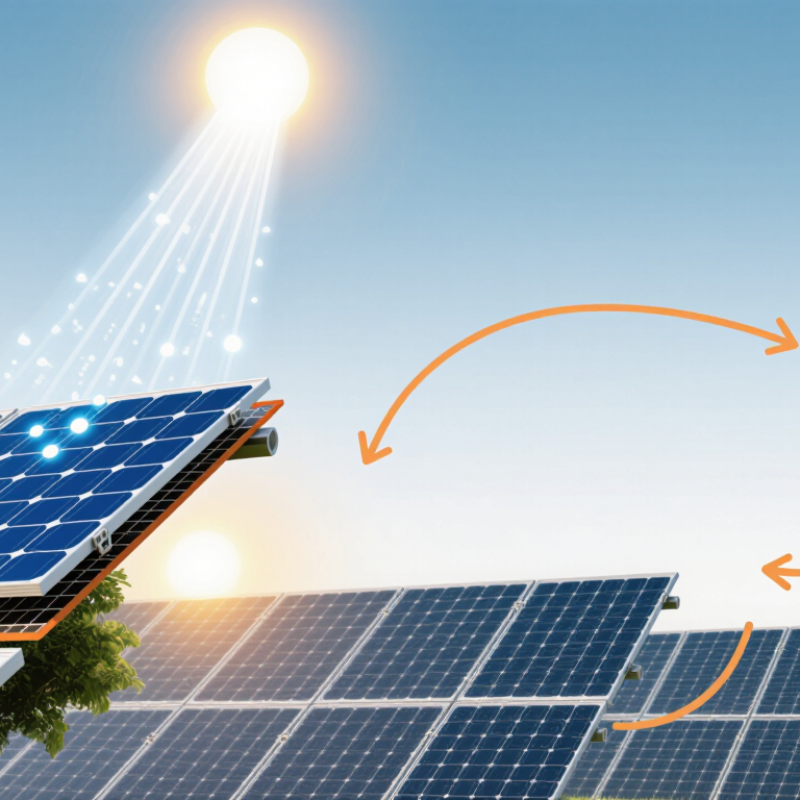
Solar panels are flat electrical devices built from photovoltaic cells, usually made with silicon. Each cell contains carefully treated semiconductor layers. When sunlight reaches the surface, photons transfer energy to electrons. This movement creates direct-current electricity. It is a quiet process. No fuel burns.
Wires collect current from many cells and carry it to an inverter. The inverter changes direct current into alternating current for household circuits. A meter then tracks production and use. Panels do not create equal power every hour. Cloud cover, roof direction, dust, heat, and partial shade can reduce output. Bright sunlight helps, but extreme heat may lower cell efficiency. A clear installation plan should include roof structure, local weather, electrical safety, and expected seasonal production. Professional assessments and certified equipment matter because small wiring errors can create serious hazards.
In practical inspections, one chimney shadow can affect several connected cells, not just the shaded corner. That detail is easy to miss. Panel ratings also come from controlled laboratory conditions, so real roofs usually produce less. This is where simple estimates need careful questioning. I would compare measured sunlight, monthly electricity use, and maintenance access before choosing a system. A south-facing roof is not automatically ideal. Roof age and angle still matter. Even the cleanest panel cannot capture sunlight that never reaches it.
| Topic | What It Means | Key Scientific or Technical Detail | Practical Importance |
|---|---|---|---|
| What a Solar Panel Is | A solar panel is an assembly of photovoltaic cells that converts sunlight directly into electricity. | Most modern panels use semiconductor cells based on silicon. The cells produce direct current (DC) electricity. | Panels generate electricity without combustion, moving fuel, or direct operational emissions. |
| How Sunlight Becomes Electricity | Photons from sunlight transfer energy to electrons inside a semiconductor cell. | When the photon energy is sufficient, electrons are released into a controlled electrical pathway, creating current. | The amount of electricity depends on sunlight intensity, cell temperature, panel orientation, and system losses. |
| Photovoltaic Effect | The photovoltaic effect is the process by which light creates an electrical voltage in a material. | A solar cell uses a semiconductor junction to separate electrical charges and establish a voltage. | This enables a panel to produce power whenever suitable light reaches its active surface. |
| Solar Cell Structure | A typical cell includes semiconductor layers, conductive contacts, an antireflective surface, and protective materials. | Cells are interconnected and protected by glass, encapsulant, a backsheet or rear glass, and a frame. | These layers improve light transmission, electrical collection, durability, and resistance to moisture. |
| Common Cell Technologies | Commercial photovoltaic modules commonly use crystalline silicon, including monocrystalline and multicrystalline designs. | Thin-film technologies use much thinner semiconductor layers deposited on a supporting surface. | Technology affects efficiency, appearance, temperature behavior, weight, and suitability for different installations. |
| Typical Module Efficiency | Module efficiency describes the percentage of incoming solar energy converted into usable electrical power under test conditions. | Many current residential crystalline-silicon modules typically fall in the approximate range of 19% to 23%. | Higher efficiency can provide more power from a limited roof area, although it may not always minimize total project cost. |
| Rated Power | Rated power is the maximum electrical output specified for a module under standardized laboratory conditions. | Residential modules commonly have nameplate ratings of approximately 350 to 550 watts, depending on size and design. | Actual output is usually lower or higher at a given moment because weather and operating conditions change. |
| Standard Test Conditions | Standard Test Conditions, or STC, provide a common basis for comparing module ratings. | STC generally uses irradiance of 1,000 W/m², a cell temperature of 25°C, and an air mass of 1.5. | STC ratings allow products to be compared, but they do not represent every real-world operating condition. |
| Light Spectrum | Solar cells respond to usable portions of the electromagnetic spectrum rather than to all incoming sunlight equally. | Silicon cells respond strongly to visible and near-infrared light, while photons below the material’s energy threshold are not converted efficiently. | Cloud cover, atmospheric conditions, and the angle of sunlight can change the spectrum and reduce energy production. |
| Direct Current Output | Photovoltaic cells and modules naturally generate direct current. | Cells are wired in series and parallel to achieve the voltage and current needed by the system. | Additional power electronics are required before the electricity can normally be used by standard building circuits. |
| Inverter Function | An inverter converts the panel’s DC electricity into alternating current used by most buildings and electrical grids. | Inverters can also perform functions such as maximum power point tracking, monitoring, and grid protection. | Conversion losses and inverter operating limits affect the amount of electricity delivered to the building. |
| Maximum Power Point Tracking | Maximum Power Point Tracking, or MPPT, helps a system operate at the voltage and current combination that produces the greatest available power. | The ideal operating point changes with irradiance and cell temperature. | MPPT helps capture more energy when sunlight conditions vary throughout the day. |
| Effect of Temperature | Solar panels generally produce less voltage as cell temperature rises. | Crystalline-silicon module power temperature coefficients are commonly around −0.3% to −0.5% per °C above the reference temperature. | A cool, sunny day can produce more power than a very hot, equally sunny day. |
| Effect of Shading | Shade blocks sunlight from part or all of a module and can reduce energy output. | Because cells and modules are electrically interconnected, localized shade can have a disproportionate effect unless suitable power electronics are used. | Chimneys, trees, nearby buildings, and roof structures should be evaluated before installation. |
| Orientation and Tilt | Orientation and tilt influence how directly sunlight reaches the panel surface. | The best configuration depends on latitude, local climate, roof geometry, and the intended production profile. | Small deviations from the ideal direction or tilt may be acceptable when shading and installation cost are favorable. |
| Daily Energy Production | Energy production changes by hour and is usually greatest near the middle of a clear day. | Daily output depends on installed capacity, solar resource, shading, temperature, system availability, and conversion losses. | Annual energy estimates are more useful than judging a system from a single day of production. |
| System Losses | Not all electricity generated by the cells reaches the building or grid. | Losses may come from wiring, inverter conversion, mismatch, soiling, shading, module temperature, and equipment downtime. | Performance estimates should use expected system yield rather than multiplying nameplate power by daylight hours alone. |
| Durability and Degradation | Solar modules gradually lose a small amount of power-producing capacity over time. | Many modern modules are designed to retain roughly 80% or more of their initial rated power after about 25 to 30 years, subject to the product warranty and conditions. | Long-term energy planning should account for gradual degradation rather than assuming constant output. |
| Energy Storage | Batteries store electricity for use when solar production is low or unavailable. | A battery system includes storage cells, a battery management system, power electronics, and safety controls. | Storage can increase self-consumption and provide backup capability, but it adds cost, conversion losses, and maintenance considerations. |
| Best Panel Selection Criteria | The best panel is not determined by efficiency alone. | Important factors include efficiency, temperature coefficient, degradation rate, power rating, dimensions, mechanical load rating, warranty terms, and installer compatibility. | A balanced evaluation should consider available space, local sunlight, project budget, expected lifetime, and the complete system design. |
Solar panels are flat electrical devices containing photovoltaic cells. These cells usually use treated silicon layers. Sunlight creates electricity quietly. No fuel burns.
Sunlight contains photons. Photons transfer energy to electrons inside silicon cells. An internal electric field guides the electrons. This movement creates direct current.
Wires collect electricity from many cells. They carry it to an inverter. The inverter changes direct current into alternating current. Household circuits can then use it.
Tempered glass shields the front surface. An encapsulant holds the cells in place. A frame adds stiffness. The backsheet helps block moisture. A junction box manages rear connections.
Yes. One chimney shadow may affect several connected cells. It can reduce more than the shaded corner. This detail is easy to miss.
Usually, no. Laboratory conditions are carefully controlled. Real roofs face clouds, dust, heat, and changing shade. A clear afternoon can still produce less electricity.
Check roof age, structure, angle, direction, and shading. Review local weather and seasonal electricity use. Inspect cables, wiring, and mounting points. Certified equipment matters.
No. Higher efficiency helps when roof space is limited. Temperature performance and ventilation also matter. A south-facing roof is not automatically ideal. Simple comparisons can mislead. My estimate could still be wrong.
Solar panels are devices that capture sunlight and transform it into electrical energy through a process called the photovoltaic effect. Each panel contains interconnected photovoltaic cells, usually protected by a durable surface, backing layer, frame, and electrical connections. When sunlight reaches these cells, its energy excites electrons within a semiconductor material, creating direct current electricity. The amount of power produced depends on factors such as sunlight intensity, panel orientation, temperature, and cell efficiency.
Understanding how do solar panels work also requires looking at the inverter. Since homes and most electrical systems use alternating current, the inverter converts the direct current generated by the panels into usable electricity. In 2026, the best solar panel choice is not simply the one with the highest efficiency. Important considerations include dependable performance, long-term durability, strong energy output in different conditions, responsible manufacturing, warranty coverage, and compatibility with the property’s energy needs.

 GAF Solar