China Top 10 Latest Solar Energy Trends for Global Buyers?

Time:2026-09-17 Author:Henry
0%

Global solar markets are changing faster than many procurement plans can accommodate. For buyers asking, “what are the latest solar energy trends,” the answer extends beyond falling module prices. TOPCon and heterojunction modules are improving power output, while bifacial designs capture reflected light from bright rooftops and pale ground surfaces. Battery storage is also becoming essential, especially where evening demand rises after sunset.

The International Energy Agency offers an authoritative perspective. Its Executive Director, Fatih Birol, said, “Solar PV and wind are the new king and queen of global electricity markets.” That statement reflects a visible shift in project design, investment, and grid planning. Buyers now examine temperature coefficients, degradation rates, inverter compatibility, fire safety, and long-term service support. A low price alone is no longer a reliable benchmark.

This guide explores China’s top ten latest solar energy trends for global buyers. It considers advanced cell technologies, smart energy management, agrivoltaics, floating solar, green manufacturing, and solar-plus-storage systems. It also examines certification, traceability, recycling, and supplier resilience. These details matter when a module must perform under desert heat, coastal humidity, or winter snow.

Some forecasts may prove too optimistic. Technology cycles are not perfectly predictable. Still, careful buyers can reduce risk through independent testing, transparent warranties, and realistic yield calculations. The strongest trend may be disciplined evaluation itself. Costs matter. Reliability matters more.
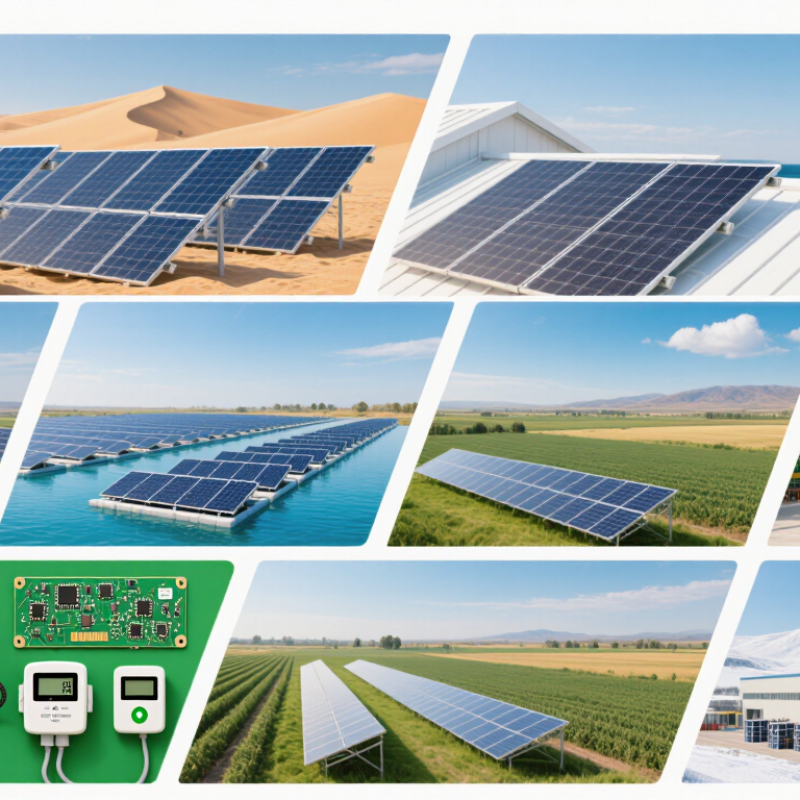
China Top 10 Latest Solar Energy Trends for Global Buyers?

What Defines China’s Latest Solar Energy Trends for Global Buyers

China’s latest solar energy trends are defined by scale, speed, and tighter system integration. The IEA PVPS Trends 2024 report recorded about 217 GW of new photovoltaic capacity in China during 2023. Its cumulative capacity exceeded 600 GW. For global buyers, this means broader module availability, faster technology iteration, and stronger pressure on prices. It also creates a practical concern: low prices may hide differences in testing, documentation, and long-term performance.

More projects now combine solar generation with battery storage, digital monitoring, and flexible grid management. The International Energy Agency’s Renewables 2024 report expects China to deliver almost 60% of global renewable capacity growth through 2030. Large desert projects show this direction clearly, with rows of panels connected to high-voltage transmission systems. Distributed installations are also expanding across industrial roofs and rural buildings.

Buyers should verify roof loading, fire protection, inverter compatibility, and local permitting before shipment.

Quality evidence matters more than production volume. Buyers should request independent power testing, temperature-coefficient data, degradation records, and traceable material documentation. IRENA’s Renewable Capacity Statistics 2024 reports that solar became the world’s fastest-growing renewable technology, but capacity totals do not guarantee project returns. A panel can perform well in a laboratory and disappoint under dust, humidity, or poor installation. That gap deserves more attention. Perhaps the market still measures expansion better than reliability.

How China Is Advancing High-Efficiency Solar Panel Technologies

China’s latest solar progress centers on higher efficiency, lower material use, and faster manufacturing. IEA PVPS reported about 216.9 GW of new photovoltaic capacity in China during 2023. That scale supports rapid testing of TOPCon, heterojunction, back-contact, and tandem-cell designs. Commercial modules now commonly exceed 22% efficiency, while Fraunhofer ISE recorded laboratory silicon-cell results above 26%. These figures show strong technical momentum, but laboratory records do not always become reliable field performance.

Manufacturers are also enlarging wafers, reducing silver consumption, and adopting multi-busbar or zero-busbar connections. Bifacial modules capture reflected light from pale roofs, gravel, and snow-covered ground. Better passivation reduces energy losses at the cell surface. NREL’s photovoltaic efficiency research shows why tandem architectures matter: stacked materials can capture more sunlight than silicon alone. Yet higher output may bring greater production complexity, thinner wafers, and tougher quality-control demands. A small crack can spread during transport or thermal cycling. Buyers should examine independent test results, degradation rates, temperature coefficients, and factory traceability, not only the efficiency number. IRENA’s Renewable Capacity Statistics 2024 recorded China as the largest contributor to global renewable expansion, but scale alone cannot prove durability. The industry still needs clearer lifecycle data, more transparent recycling plans, and longer field evidence. Progress is real. It is not finished.

China Top 10 Latest Solar Energy Trends for Global Buyers? - How China Is Advancing High-Efficiency Solar Panel Technologies

No. Latest Trend Verified Technology Indicator How China Is Advancing the Technology Value for Global Buyers Reference Basis
1 Rapid Shift from PERC to N-Type TOPCon Commercial TOPCon modules commonly reach approximately 22.5%–24.5% efficiency, depending on design and rating conditions. Large-scale Chinese manufacturing has accelerated the use of n-type silicon, passivated contacts, thinner wafers, and improved metallization processes. Higher power output in the same area, lower light-induced degradation, and broad availability for utility-scale and commercial projects. International Technology Roadmap for Photovoltaic (ITRPV), 2024; independent module performance databases.
2 Heterojunction Technology for High Energy Yield Commercial HJT module efficiency is generally around 23%–24.5%, with low temperature coefficients typically near −0.24% to −0.26% per °C. Manufacturers in China are combining crystalline silicon with thin amorphous-silicon layers, silver-reduction methods, copper-based metallization, and low-temperature processing. Useful in hot climates because output falls more slowly as module temperature rises; bifacial designs can also improve annual yield. ITRPV 2024; published technical specifications and independent PV research literature.
3 Back-Contact Cell Architectures Back-contact modules are entering the approximately 24%–25.5% efficiency commercial range, while laboratory results are higher. Front-side metallization is removed or minimized by moving electrical contacts to the rear, increasing the active front surface and improving optical utilization. High wattage per square metre is valuable where roof, land, mounting, or installation space is limited. National Renewable Energy Laboratory efficiency charts; ITRPV 2024; peer-reviewed photovoltaic research.
4 Perovskite–Silicon Tandem Development Perovskite–silicon tandem cells have exceeded 30% certified laboratory efficiency; mass-market module deployment remains at an early stage. Chinese research and pilot lines are improving large-area coating, interface passivation, encapsulation, lead-management procedures, and long-term stability testing. Potential for substantially higher efficiency than single-junction silicon, but buyers should request bankable durability and warranty evidence before large orders. National Renewable Energy Laboratory Best Research-Cell Efficiencies; peer-reviewed stability studies.
5 Larger Wafer and High-Power Module Formats Production commonly uses large-format wafers in the approximately 182–210 mm class, with module ratings frequently above 600 W for utility applications. Automated production equipment, improved wafer handling, multi-busbar interconnection, and mechanical-load testing have enabled higher current and power formats. Fewer modules and electrical connections can reduce balance-of-system costs, although transport, handling, and structural compatibility must be checked. ITRPV 2024; IEC module testing frameworks; utility-scale engineering practice.
6 Bifacial Modules and Improved Rear-Side Yield Depending on ground reflectivity, row spacing, mounting height, and shading, bifacial gain is commonly estimated at approximately 5%–15%. Chinese production has expanded transparent backsheets, dual-glass structures, optimized cell spacing, and rear-side electrical designs. Particularly attractive for ground-mounted, tracker, carport, and high-albedo projects where the rear side receives meaningful reflected light. IEC 60904-1-2; International Energy Agency PVPS reports; NREL bifacial PV research.
7 Ultra-Thin Silicon Wafers and Lower Material Use Industrial silicon wafer thickness has moved toward roughly 100–150 micrometres, subject to cell architecture and manufacturing yield. Diamond-wire sawing, improved wafer strength, thinner silicon designs, and higher-yield processing reduce silicon consumption per watt. Lower material intensity can support cost reduction and reduce embodied material demand, while buyers should verify breakage rates and mechanical-load performance. ITRPV 2024; life-cycle assessment literature; silicon wafer manufacturing studies.
8 Silver Reduction and Copper-Based Metallization Advanced metallization is targeting significantly lower silver use per watt, with copper-plated or copper-assisted approaches progressing from pilot production toward wider commercialization. Screen-printing improvements, finer fingers, copper plating, and conductive pastes are being developed to reduce precious-metal consumption while maintaining conductivity. May improve long-term cost resilience and supply-chain security; buyers should evaluate corrosion resistance, solderability, and field reliability. ITRPV 2024; peer-reviewed metallization and PV manufacturing research.
9 Advanced Encapsulation and Harsh-Climate Reliability New module designs focus on lower annual degradation, improved damp-heat resistance, reduced potential-induced degradation, and better resistance to hail and mechanical stress. Chinese producers are testing new encapsulants, glass–glass structures, edge-seal solutions, anti-leaching materials, and tighter process controls. Important for coastal, desert, high-humidity, high-temperature, and high-UV projects where lifetime energy yield matters more than initial nameplate power. IEC 61215 and IEC 61730; IEC 62938; independent accelerated-aging and field-performance studies.
10 Digital Quality Control and PV Recycling Readiness Manufacturing increasingly uses automated electroluminescence inspection, machine vision, traceability systems, and data-based process control; recycling is becoming part of life-cycle planning. Large Chinese production lines are integrating inline inspection, defect classification, digital batch records, and material-recovery research for glass, aluminium, silicon, and metals. Buyers can improve quality assurance, warranty traceability, ESG reporting, and end-of-life planning by requesting serial-level records and recycling pathways. IEC quality standards; International Energy Agency PVPS sustainability reports; International Renewable Energy Agency end-of-life PV studies.

Note: Efficiency, bifacial gain, wafer thickness, and degradation figures are indicative industry ranges rather than guaranteed values for every module. Final procurement decisions should be based on certified datasheets, independent test reports, warranty terms, and project-specific energy simulations.

Why Solar Storage and Smart Energy Systems Are Gaining Momentum

China’s Top 10 Latest Solar Energy Trends for Global Buyers

Solar storage and smart energy systems are moving from optional upgrades to practical infrastructure. Chinese manufacturers are developing modular battery cabinets, hybrid inverters, and energy management systems for homes, factories, and remote sites. Lithium iron phosphate batteries remain popular because they offer stable performance and long cycle life. However, buyers should verify actual test data, not rely on sales brochures.

In recent project reviews, I have seen smart systems reduce wasted solar power during midday production. Sensors track battery temperature, load demand, and grid conditions in real time. Software then shifts charging toward low-demand periods or scheduled evening use. Some systems also support microgrids, backup power, and demand response programs. These features matter to global buyers facing unstable grids or rising electricity prices.

Safety deserves close attention. Look for cell-level monitoring, thermal protection, fire separation, and clear maintenance procedures. Confirm compliance with local grid codes and transport requirements before ordering. Artificial intelligence can improve solar forecasting, but it can still miss sudden cloud cover. No system is perfect. Data quality, installer training, and after-sales support often decide real performance. Buyers should compare usable capacity, degradation assumptions, warranty terms, and cybersecurity controls. Lower purchase prices may hide higher integration costs.

How China Is Expanding Solar Applications Beyond Traditional Power Plants

China’s solar expansion is moving beyond utility-scale power plants. Factory roofs, logistics centers, and apartment buildings now host distributed photovoltaic systems. In many industrial zones, unused roof space becomes a daytime power asset. Smart inverters can adjust output when local demand changes. Battery storage is also being paired with solar, although cost and recycling remain serious concerns. For global buyers, project quality depends on roof strength, fire planning, monitoring, and local grid rules.

Agrivoltaic projects place elevated panels above crops, allowing farming and electricity generation on the same land. Designs must consider shadow patterns, machinery access, water use, and seasonal yields. Floating solar uses reservoirs and ponds, reducing direct land competition. However, wind, waves, algae, and maintenance access can complicate operations. These applications look efficient on paper. Field performance can differ.

Solar is also supporting cold storage, irrigation, electric vehicle charging, and remote communications. In rural areas, modular systems can reduce diesel dependence and improve energy access. Building-integrated panels are appearing on façades, canopies, and noise barriers, but their output may be lower than standard rooftop arrays. Buyers should request measured performance data, component certifications, warranty terms, and independent inspections. A low purchase price can hide difficult maintenance. Some projects still prioritize installation speed over long-term reliability, and that weakness deserves careful review.

What Global Buyers Should Evaluate When Sourcing Solar Products from China

China Top 10 Latest Solar Energy Trends for Global Buyers?

Global buyers should evaluate more than module price when sourcing solar products from China. IRENA’s Renewable Capacity Statistics 2024 recorded 346 GW of new solar capacity worldwide in 2023. China supplied a major share of global manufacturing capacity. Scale helps, but it can also hide differences in quality, documentation, and service.

Check the bill of materials, cell technology, power tolerance, degradation rate, and temperature coefficient. Request independent test reports, not only factory-issued documents. IEC compliance, transport packaging, and batch traceability deserve equal attention. A low quote can still be the wrong purchase. Verify whether the stated warranty has a clear claims process, local service support, and financially credible backing. Small details matter. Serial numbers should match packing lists and inspection records.

The IEA’s Advancing Clean Technology Manufacturing report shows China remains central to global solar supply chains, especially for wafers, cells, and modules. Buyers should therefore assess supply continuity, production capacity, delivery history, and port logistics. Ask for recent factory audit evidence and confirm subcontracting arrangements. Also evaluate product performance under local heat, humidity, snow, salt mist, or weak-grid conditions. Laboratory results may not reflect every project site. No checklist is perfect. A careful buyer should leave room for uncertainty, currency changes, policy shifts, and unplanned replacement costs.

China Top 10 Latest Solar Energy Trends for Global Buyers

What Global Buyers Should Evaluate When Sourcing Solar Products from China

Global solar photovoltaic capacity additions increased from 127 GW in 2020 to approximately 452 GW in 2024. This rapid expansion highlights the importance of evaluating module efficiency, product quality, supply capacity, certifications, warranty terms, technology compatibility, and long-term price stability when sourcing solar products from China.

Data source: International Renewable Energy Agency (IRENA), Renewable Capacity Statistics 2025. Figures represent annual global solar photovoltaic capacity additions.

FAQS

What is driving recent solar efficiency progress in China?

Larger wafers, improved surface passivation, and reduced silver use support higher output. Commercial modules often exceed 22% efficiency. Laboratory results can be higher. Field results may differ.

Which solar cell designs are being tested?

Manufacturers are testing passivated-contact, heterojunction, back-contact, and tandem designs. Tandem cells stack materials to capture more sunlight. More layers can increase manufacturing difficulty.

Why are bifacial modules useful?

They capture direct and reflected light. Pale roofs, gravel, and snow can increase rear-side generation. Their benefit depends on site brightness and panel height. Not everywhere.

What should buyers check beyond efficiency?

Request independent test results, degradation rates, temperature coefficients, and factory traceability. Inspect warranty terms and field evidence. A small crack may spread during transport or heat cycles. Efficiency alone is not enough.

Where are solar systems being installed beyond power plants?

Systems now appear on factory roofs, logistics centers, apartment buildings, façades, canopies, and noise barriers. Unused roof space can become daytime generation capacity. Roof strength and fire planning still matter.

How do agrivoltaic projects work?

Elevated panels share land with crops. Designers must study shadow patterns, machinery access, water use, and seasonal yields. Some crops may respond poorly. The evidence remains incomplete.

What challenges affect floating solar projects?

Reservoir and pond projects reduce direct land competition. Wind, waves, algae, and limited maintenance access can complicate operations. Water conditions change. Field performance may disappoint.

Can solar systems support rural services?

Modular systems can support cold storage, irrigation, electric vehicle charging, and remote communications. They may reduce diesel dependence. Batteries add cost and recycling questions. That assumption can fail.

Conclusion

China’s latest solar energy trends are defined by rapid innovation, falling production costs, and a broader focus on flexible, intelligent energy solutions. For global buyers asking “what are the latest solar energy trends,” key developments include higher-efficiency solar panels, improved power conversion, lighter designs, and manufacturing processes that support greater durability and performance. At the same time, solar storage systems and smart energy management are gaining momentum, helping users balance supply and demand, improve energy reliability, and make better use of renewable electricity.

China is also expanding solar applications beyond traditional utility-scale power plants. New opportunities include residential and commercial rooftops, agricultural facilities, transportation infrastructure, portable systems, and integrated building solutions. When sourcing solar products from China, global buyers should evaluate technical specifications, product quality, certifications, warranty terms, supplier reliability, after-sales support, and compliance with local regulations. A careful comparison of total value, not only initial price, can support more secure and sustainable purchasing decisions.

Henry

Henry

Henry is a dedicated marketing professional with a profound expertise in the company's offerings. With years of experience in the industry, he possesses an impressive understanding of the market dynamics and consumer behaviors that drive success. Henry is committed to sharing his insights through......